Soundtoys Radiator 5 Plugin
Introducing Radiator, a dual drive tube input channel and EQ, based on the classic Altec 1567A tube mixer from the 1960s.
The original Altec 1567A hardware was a rack-mounted five-input tube mixer with removable transformers, a simple two-knob EQ, an unmistakable green faceplate, and a whopping 97 dB of gain. The sound, by today’s standards, is colored and gritty, with a heaping helping of good old fashioned hardware noise. In its day, it was used on many early Motown hits, and found its way into the PA racks of countless churches and school auditoriums across the USA.
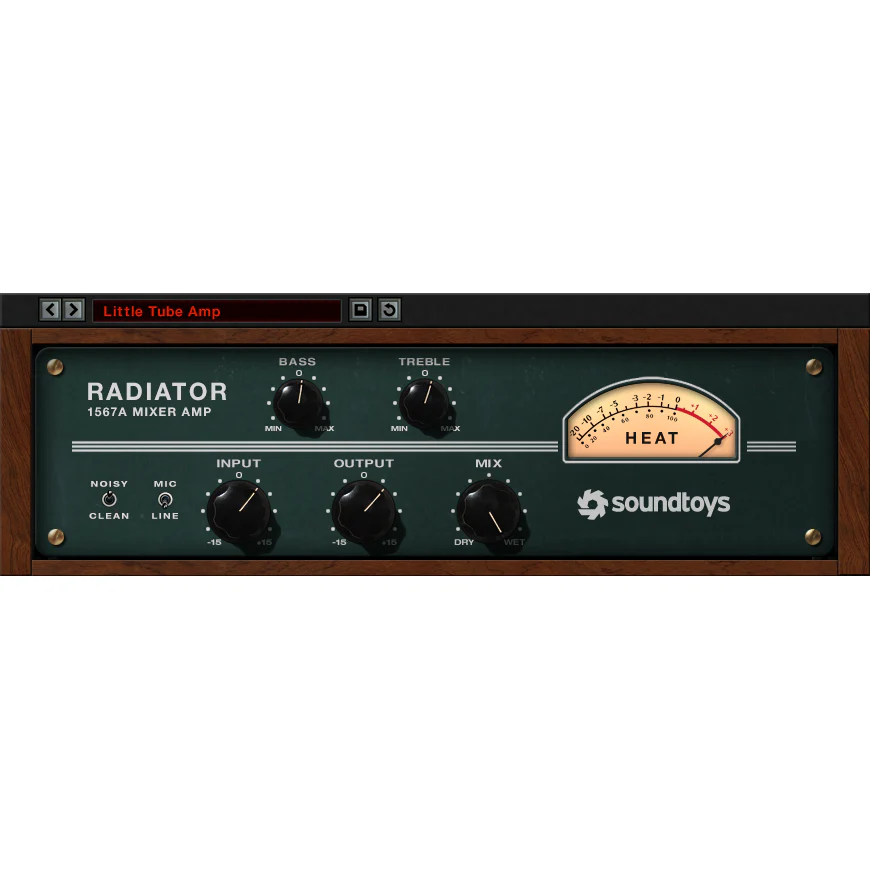
Radiator brings the classic Altec tube sound to desktop recording rigs, capturing the distinctive warmth and punch of the original hardware. Featuring the modeled bass and treble tone controls from the original unit, a mix control for easy parallel processing, and the saturation and harmonic effects of the original hardware’s input and output amplifiers.
Product Information
Product Information
Shipping & Returns
Shipping & Returns
Soundtoys Radiator 5 Plugin
Soundtoys Radiator 5 Plugin
Introducing Radiator, a dual drive tube input channel and EQ, based on the classic Altec 1567A tube mixer from the 1960s.
The original Altec 1567A hardware was a rack-mounted five-input tube mixer with removable transformers, a simple two-knob EQ, an unmistakable green faceplate, and a whopping 97 dB of gain. The sound, by today’s standards, is colored and gritty, with a heaping helping of good old fashioned hardware noise. In its day, it was used on many early Motown hits, and found its way into the PA racks of countless churches and school auditoriums across the USA.
Radiator brings the classic Altec tube sound to desktop recording rigs, capturing the distinctive warmth and punch of the original hardware. Featuring the modeled bass and treble tone controls from the original unit, a mix control for easy parallel processing, and the saturation and harmonic effects of the original hardware’s input and output amplifiers.
Original: $99.00
-65%$99.00
$34.65Product Information
Product Information
Shipping & Returns
Shipping & Returns
Description
Introducing Radiator, a dual drive tube input channel and EQ, based on the classic Altec 1567A tube mixer from the 1960s.
The original Altec 1567A hardware was a rack-mounted five-input tube mixer with removable transformers, a simple two-knob EQ, an unmistakable green faceplate, and a whopping 97 dB of gain. The sound, by today’s standards, is colored and gritty, with a heaping helping of good old fashioned hardware noise. In its day, it was used on many early Motown hits, and found its way into the PA racks of countless churches and school auditoriums across the USA.
Radiator brings the classic Altec tube sound to desktop recording rigs, capturing the distinctive warmth and punch of the original hardware. Featuring the modeled bass and treble tone controls from the original unit, a mix control for easy parallel processing, and the saturation and harmonic effects of the original hardware’s input and output amplifiers.